

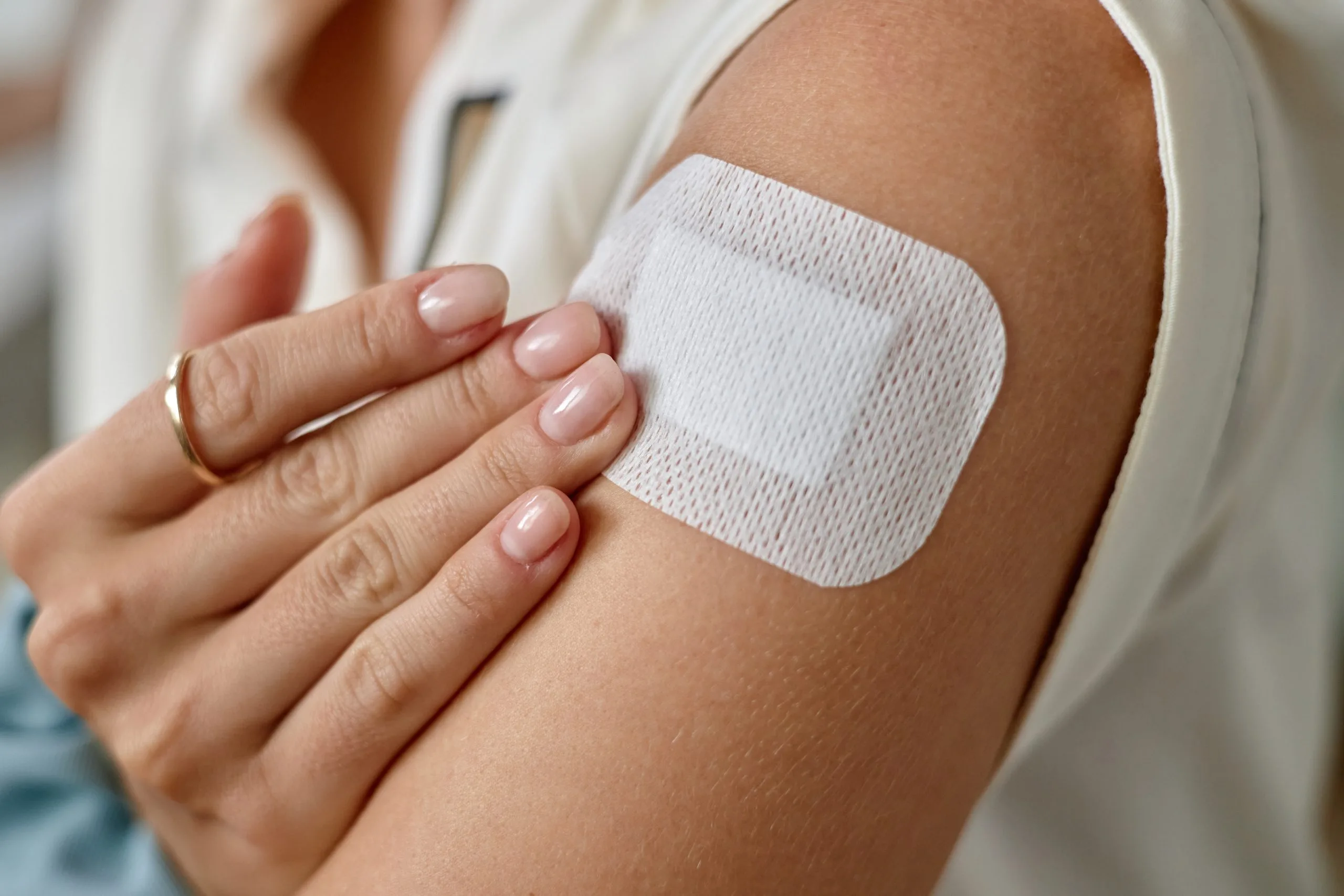
After Mohs surgery, expect a bandaged wound, mild soreness, and some swelling for the first few days. Most surface healing happens over one to four weeks, and the scar keeps fading for a year or more. Gentle daily wound care, a moist healing surface, and strict sun protection give your scar its strongest chance to fade. This guide covers each stage of recovery, from the first night home to long-term scar care.
Mohs surgery removes skin cancer while sparing as much healthy tissue as possible. That precision is a big reason patients choose it for the face, ears, and other visible areas. The wound left behind still needs time and steady care to heal well.

Your wound may be closed with stitches, repaired with a reconstructive surgery approach, or left to heal on its own. The type of repair affects your timeline, so follow the written instructions our team gives you. The guidance below applies to most patients.
You will leave with a pressure bandage over the wound. This bandage helps limit bleeding and swelling during the first day. Leave it in place for the time your instructions specify, which is usually 24 to 48 hours.
The local numbing medicine wears off within a few hours. Expect a dull ache or tenderness once it does. Most patients manage this with acetaminophen. Ask our team before taking aspirin, ibuprofen, or other pain relievers. Do not stop any prescribed blood thinner unless your prescribing physician tells you to.
Plan to rest for the remainder of the day. Have someone drive you home, especially if the wound is near your eye. A bulky bandage there can block your vision.
Swelling is a normal part of healing, and it is often more noticeable on the face. Facial skin has a rich blood supply, so fluid collects there easily. Swelling usually peaks around day two or three, then slowly goes down over the next week.
Bruising is common too. Surgery on the forehead, nose, or near the eyes can cause bruising that spreads to the eyelids or cheeks. This can look dramatic, but it fades over one to two weeks.
To limit swelling:
Sleep with your head raised on two or three pillows for the first few nights.
Avoid bending over or lifting heavy objects.
Use cold packs as described later in this guide.
Every wound heals at its own pace. Size, location, repair type, and your overall health all play a role. Here is a general timeline:
Days 1 to 2: Keep the pressure bandage on and rest. Mild pain and swelling are expected.
Days 3 to 7: Begin daily wound care. Swelling and bruising start to fade.
Days 7 to 14: Stitches, if you have them, are usually removed in this window. The incision line is pink and may feel tight.
Weeks 2 to 6: Wounds left to heal on their own continue filling in. Most stitched wounds are fully closed.
Months 1 to 3: The scar is often red or pink and may feel firm or raised.
Months 3 to 18: The scar softens, flattens, and fades toward your natural skin tone.
Most patients return to desk work and light daily activities within a day or two. Strenuous exercise usually waits one to two weeks.
Any surgery that cuts through the full thickness of the skin leaves a scar. Mohs surgery aims to keep that scar as small as possible by removing only the tissue that contains cancer.
How noticeable the scar becomes depends on several factors:
The size and depth of the wound
Its location on the body
Your skin type and age
How well you follow aftercare instructions
Sun exposure during healing
Many facial scars from Mohs surgery fade into a thin line that blends with natural skin creases. Your aftercare choices have a real effect on the final result.
A steady routine matters more than any single product. The steps below form the core of a strong aftercare plan.
Keep the wound moist. Wounds covered with a thin layer of petroleum jelly heal faster and scar less than wounds left to dry out.
Clean it gently once or twice a day. Use mild soap and water as directed.
Keep it covered. A clean bandage protects the wound from dirt, friction, and sun.
Rest your body. Healing takes energy. Get enough sleep in the first week.
Eat well and drink water. Protein, fruits, and vegetables give your skin what it needs to rebuild.
Avoid smoking. Smoking reduces blood flow to the skin and slows healing.
Limit alcohol. Alcohol can increase bleeding and swelling, especially in the first few days.
Some habits can slow healing or make a scar more visible. In the first one to two weeks, avoid:
Heavy lifting and hard exercise. Activities that raise your heart rate or blood pressure can cause bleeding and stretch the wound.
Bending over. This increases pressure in the face and head.
Swimming, hot tubs, and saunas. Soaking the wound raises the chance of germs entering it.
Picking or scratching. This disturbs new tissue and can widen the scar.
Hydrogen peroxide or rubbing alcohol. These can damage healthy new cells. Stick with mild soap and water unless told otherwise.
Antibiotic ointments not recommended by our team. Some can cause skin reactions. Plain petroleum jelly works well for most wounds.
Makeup on the wound. Wait until the wound has fully closed.
Most recoveries go smoothly. Contact our dermatology team if you notice any of the following:
Bleeding that does not stop after 20 minutes of firm, steady pressure
Redness that spreads or grows after the third day
Warmth, pus, or a bad smell from the wound
Pain that gets worse after the first few days rather than better
Fever or chills
Stitches that come loose or a wound edge that opens
If bleeding starts, press firmly on the bandage with clean gauze for 20 minutes without lifting to check. Many minor bleeds stop with steady pressure. If bleeding continues, reach out to us right away.
Daily wound care is the most important thing you control during recovery. The steps below are general. Your written instructions take priority.
Once the pressure bandage comes off, follow this routine once or twice daily:
Wash your hands with soap and water.
Gently remove the old bandage. If it sticks, wet it with water first.
Clean the wound with mild soap and water using a cotton swab or clean gauze.
Rinse gently and pat dry with a clean towel or gauze.
Apply a thin layer of petroleum jelly over the wound.
Cover with a fresh, nonstick bandage.
Continue this routine until stitches are removed or the wound fully closes. For wounds healing on their own, this may take several weeks.
Facial wounds need a few extra steps because the face moves constantly when you eat, talk, and make expressions.
Limit big facial movements for the first few days. Avoid wide yawns, chewing hard foods, and exaggerated expressions if the wound is near your mouth.
Be careful with glasses. If the wound is on your nose, frames may rest on the bandage. Ask our team about padding or wearing them less often.
Protect the eye area. Wounds near the eye can cause watery eyes or blurry vision from swelling. This usually improves within days.
Wash your face gently. Clean around the wound with a soft cloth. Do not let shower water spray directly on it.
Shave carefully. Avoid shaving over or right next to the wound until it has healed.
Keep the bandage dry for the first 24 to 48 hours. After that, short showers are usually fine. Pat the area dry right away and replace a wet bandage with a fresh one.
Clean does not mean scrubbed. Gentle washing removes crust and debris without harming new tissue. Always use clean hands, clean gauze, and fresh bandages.
Cold packs help reduce swelling and ease discomfort during the first 48 hours. Use them with care:
Wrap the ice pack in a clean, dry cloth.
Apply for 10 to 15 minutes at a time, then remove it for at least an hour.
Keep the bandage dry while icing.
Never place ice directly on the skin.
A bag of frozen peas works well because it shapes to curved areas such as the nose and cheek. After the first two days, ice offers less benefit.
Your new skin is fragile. Protect it from bumps, rubbing, and sun.
Keep a bandage on until the wound has fully closed.
Wear a wide-brimmed hat outdoors, especially for wounds on the face, scalp, or ears.
Avoid tight clothing, hats, or straps that rub the area.
Sleep on the side opposite the wound if possible.
In the Phoenix and Surprise area, UV levels stay strong for most of the year. Even short walks to the car add up. Cover the wound whenever you step outside.
Take a quick look at your wound each time you change the bandage. Normal healing includes:
Mild pinkness around the edges
Some clear or slightly yellow drainage in the first few days
Tenderness that slowly improves
Itching as the wound closes
Itching is a common sign of healing. Do not scratch. A cool compress can help. Compare each day to the day before. A wound that looks a little better over time is on track.
A moist wound forms less scab, and that is a good thing. Thick, dry scabs can slow healing and lead to a more noticeable scar.
If a scab forms:
Keep it covered with petroleum jelly so it stays soft.
Let it come off on its own during gentle cleaning.
Never pick or peel it.
Wounds healing without stitches often form a yellowish layer in the base during the first weeks. This is a normal part of healing, not pus. Keep cleaning and covering it as directed.
The wound closing is only the first stage. Scar care continues for months after your last bandage.
Once your wound has fully closed and any stitches are out, these steps help the scar mature well:
Protect it from the sun. UV exposure can darken a healing scar and keep it discolored for a long time. Use a broad-spectrum sunscreen with SPF 30 or higher every day, and reapply every two hours outdoors.
Try silicone gel or sheets. Silicone products are widely used to help flatten and soften scars. Ask our team when to start.
Massage the scar. Starting a few weeks after healing, gentle massage with lotion can help soften firm tissue. Ask before you begin, since timing depends on your repair.
Keep the skin moisturized. Hydrated skin heals and remodels more smoothly.
Be patient. A scar that looks red and raised at six weeks often looks much better at six months.
Facial scars often heal well because the face has strong blood flow. Even so, they can stay pink for several months, especially on the nose and cheeks.
Some patients notice a small bump or ridge along the scar in the first few months. This often softens with time and massage. Others notice a slight dip where tissue was removed. Many of these changes improve as the scar matures.
After the wound has fully closed, makeup can help cover redness. Choose a mineral-based product, and remove it gently each night. A tinted mineral sunscreen offers both coverage and protection.
Scars keep changing for 12 to 18 months. Keep up sun protection the entire time, and make daily sunscreen a lifelong habit. This protects your scar and lowers your chance of new skin cancers.
If a scar still bothers you after it matures, several options can improve how it looks. Regency Specialties offers laser and device treatments that may help with texture and color. Some patients may benefit from a scar revision through our Plastic Surgery. Our team can tell you whether any of these fit your scar once it has matured.
Ongoing skin cancer care matters too. Regular skin checks help catch new spots early, when they are easier to treat with smaller wounds.
The main lesson of What to Expect After Mohs Surgery: Scar Care Tips is that your daily habits shape your scar. Expect swelling and soreness in the first few days, surface healing over a few weeks, and gradual fading over a year or more. Keep the wound clean, moist, and covered. Protect it from the sun every day. Our team is here to guide you through each stage of healing.