

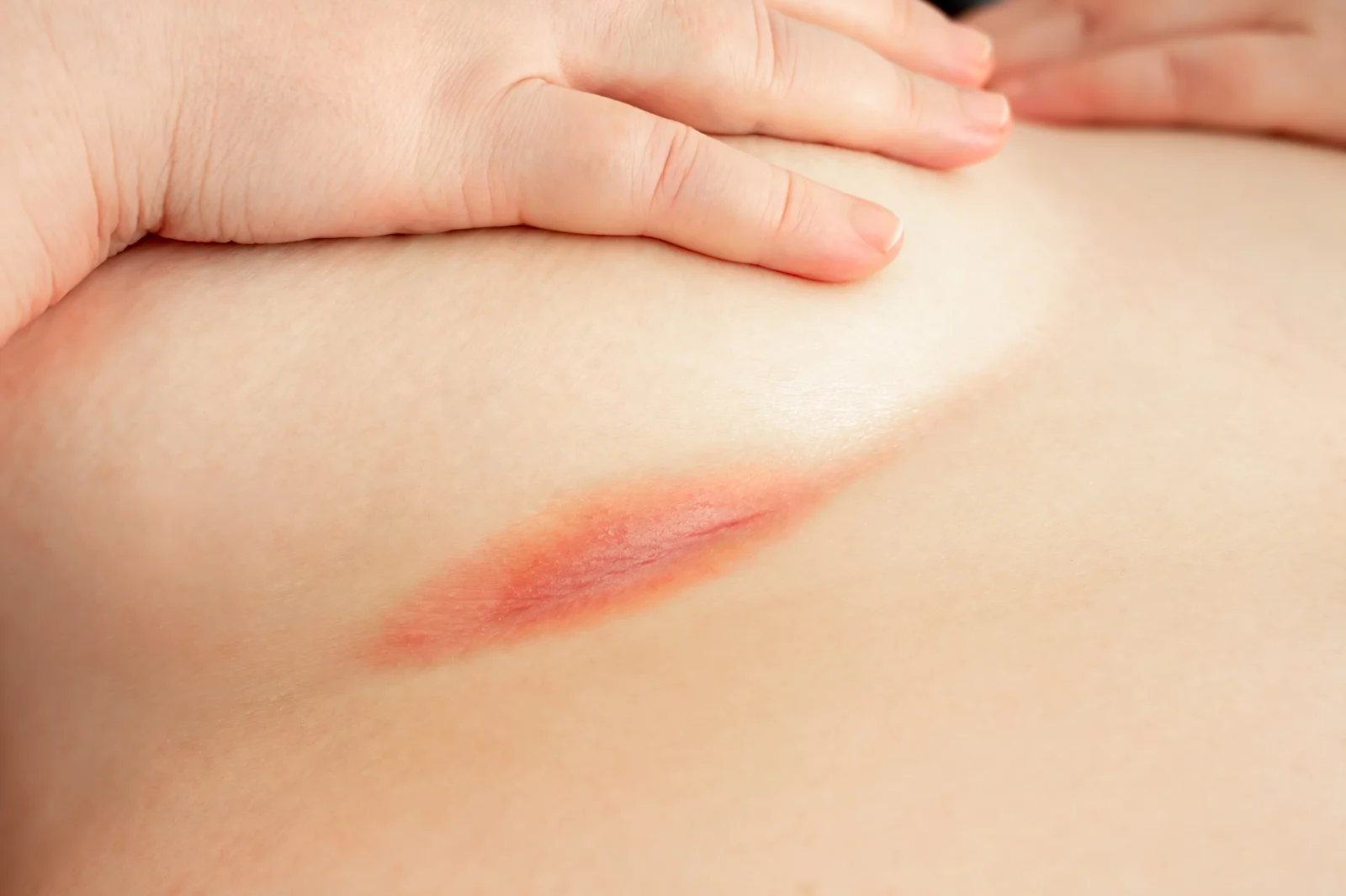
Intertrigo rash clears when the skin fold stays clean and dry and any yeast or bacteria growing in the fold is treated with the right medication. Most mild cases improve within a week or two of careful home care. Learning how to treat intertrigo rash early keeps it from cracking open and turning into an infection. A rash that lingers or keeps coming back should be checked by our medical dermatology.
Intertrigo is inflammation of skin that rests against other skin. It forms in folds where moisture and rubbing build up. Common spots include the area under the breasts, the groin, the inner thighs, the armpits, the skin under a belly fold and the spaces between the toes. Babies often get it in neck creases.
The rash starts as simple irritation. Once the skin barrier breaks down, yeast or bacteria can move in and make the rash harder to clear.
Intertrigo usually looks like a mirror image on both sides of the fold. Watch for these signs:
Small red spots just outside the main rash often signal a yeast infection. Rashes in folds can also resemble eczema or contact dermatitis, so a correct diagnosis matters.
Home care is the first step for a mild rash and the foundation of every treatment plan.
Skip scented lotions, harsh scrubs and heavy powders. These can irritate broken skin.
When home care is not enough, medication targets the cause of the rash.
Antifungal creams such as clotrimazole, miconazole or nystatin clear yeast. A low-strength steroid cream can calm redness and itch. Skin in folds is thin, so steroids are used for short periods under a provider’s guidance. Bacterial infections may need an antibiotic ointment such as mupirocin. Some prescriptions combine an antifungal with a mild steroid.
Widespread or repeat yeast infections may call for an oral antifungal such as fluconazole. Spreading redness, warmth or pus can mean a deeper bacterial infection that needs oral antibiotics. An antihistamine at bedtime may ease nighttime itching.
| Treatment | What It Does | When It Is Used |
|---|---|---|
| Barrier cream | Shields skin from moisture and rubbing | Mild rash and daily prevention |
| Topical antifungal | Clears yeast on the skin | Bright red rash with satellite spots |
| Low-strength topical steroid | Calms redness and itch | Short courses for inflamed skin |
| Topical antibiotic | Treats surface bacteria | Oozing, crusting or odor |
| Oral antifungal | Clears yeast from within | Widespread or repeat yeast infections |
| Oral antibiotic | Treats deeper infection | Spreading redness or warmth |
Scratching tears the skin and invites infection. A cool, damp compress for 10 to 15 minutes can calm burning. Keep fingernails short. Choose soft fabrics that do not rub. If itching wakes you at night, ask our team whether an antihistamine is a good fit for you.
Broken skin gives yeast and bacteria an easy way in. Keeping folds dry every day is the most effective protection. Wash fabric fold liners after each use. Patients with diabetes should work on steady blood sugar control, since high levels feed yeast.
Watch for warning signs such as pus, a spreading red border, warmth or fever. These need prompt medical care.
Make an appointment with a dermatologist if:
A dermatologist can confirm whether yeast, bacteria or another skin condition is behind the rash. That answer decides which medication will work. Our intertrigo page explains how our dermatology team approaches this condition.
Intertrigo heals when the skin fold stays clean and dry and any infection is treated with the correct medication. Start with gentle washing, thorough drying and a barrier cream. If the rash lingers, oozes or returns, our dermatology team can find the cause and recommend a treatment that fits your skin.

About the Author
Regency Specialties
November 9, 2026